
AI in HR in 2026: The Practical Playbook for Smarter People Operations
Artificial intelligence has moved from being an interesting add-on in HR to becoming a serious operating lever. In 2026, the conversation is no longer about whether HR should “experiment” with AI. It is about whether HR can deploy AI in ways that improve measurable outcomes: faster hiring, better employee experiences, more accurate skills planning, lower admin burden, stronger compliance, and clearer business alignment. Recent 2026 research from Gartner, Deloitte, McKinsey, and SHRM points to a common theme: the organizations getting value from AI are not the ones collecting the most tools, but the ones redesigning work, governance, and workflows around actual business outcomes. (gartner.com)
That shift matters because HR is being asked to do more than digitize paper processes. CHROs are now expected to help shape workforce strategy in an AI-enabled environment, where the most valuable gains come from reducing friction, improving decision quality, and building adaptable capabilities across the organization. AI is also exposing a fundamental weakness in many HR operating models: disconnected systems, fragmented data, and processes that were designed for control rather than agility. As a result, the practical question for HR leaders is not “What can AI do?” but “What operating model allows AI to create durable value?” (mckinsey.com)
This playbook is written for HR leaders, people operations teams, and technology stakeholders who need a grounded approach. It focuses on where AI actually helps, where human judgment remains essential, how to measure impact, and how to build a 90-day modernization roadmap that avoids the most common implementation traps.
1. Hook: Why HR technology is shifting from shiny tools to measurable outcomes
For years, HR technology buying decisions were often driven by feature lists, demos, and vendor promises. The result was a market full of point solutions that solved narrow problems but rarely improved the end-to-end experience of employees or HR teams. In 2026, that model is losing credibility. Leaders are increasingly judged on outcomes: time-to-productivity, candidate quality, internal mobility, manager effectiveness, compliance confidence, and employee effort. Gartner’s 2026 trends emphasize saving employee effort in the most friction-filled moments, while Deloitte’s human capital research highlights the importance of redesigning work to deliver both business and human outcomes. (gartner.com)
This is a meaningful change in how HR technology is evaluated. “Can it automate a workflow?” is still relevant, but it is no longer sufficient. The better question is whether the workflow is worth automating in the first place, whether the system integrates with surrounding processes, and whether the result reduces toil without introducing risk. That is especially important in HR, where bad automation can amplify bias, create confusion, or degrade trust if employees receive fast but low-quality outputs. Gartner explicitly warns about AI-driven “workslop,” or fast but poor-quality work, which is a useful reminder that speed alone is not value. (gartner.com)
The outcome orientation also changes the way HR teams should build business cases. Instead of proposing a tool because it is “AI-powered,” HR leaders should define the target state in operational terms: lower case resolution times, fewer manual handoffs, more accurate skills visibility, better completion rates for onboarding tasks, or improved manager adoption of self-service. SHRM’s 2026 research shows that many organizations still do not formally measure the success of AI investments, which leaves them unable to connect adoption to value. That measurement gap is one reason why shiny tools often fail to survive budget scrutiny. (shrm.org)
The most important shift, then, is conceptual. HR technology in 2026 is not a product catalog problem. It is an operating design problem. Organizations that treat AI as a way to improve measurable people outcomes will build stronger, simpler, and more defensible HR systems than those that treat AI as a procurement trend.
2. The 2026 landscape: what current HR research says is changing now
The 2026 landscape is defined by four overlapping forces: AI adoption, skills disruption, employee experience pressure, and operating-model redesign. Across current research, one message is consistent: the future of work is not arriving as a single event. It is already reshaping work structures, expectations, and HR priorities in real time. McKinsey describes 2026 as a period shaped by artificial intelligence, economic uncertainty, and changing workforce structures, while Deloitte’s 2026 human capital research emphasizes that organizations need to combine human creativity, judgment, and adaptability with AI rather than simply automate around people. (mckinsey.com)
SHRM’s 2026 AI research suggests that adoption is broadening, but unevenly. AI use in HR is becoming more common in recruiting, HR technology, learning and development, and employee experience, while use remains much lower in compliance, diversity, and executive relations. That pattern is important because it shows where organizations feel comfortable delegating to AI and where they are still cautious. It also reflects a pragmatic reality: transactional and process-heavy work is easier to automate than judgment-intensive decisions that carry reputational or legal risk. (shrm.org)
At the same time, research points to a widening gap between AI ambition and execution. Deloitte reports that many organizations are investing heavily in AI but still struggle with change capability, learning, and workforce adaptation. SHRM reports that only a minority of organizations feel they manage change effectively, and many do not believe they are ready for continuous learning demands. These findings matter because AI in HR is not merely a software layer; it is a new expectation for how quickly the function can learn, adapt, and redesign processes. (deloitte.com)
The employee side of the equation is changing too. SHRM’s employee experience work suggests that employee experience is now a top HR priority in 2026, and Gartner’s future-of-work commentary reinforces the need to create more cohesive, less fragmented work environments. The core implication is that employees are no longer impressed by digital convenience alone. They expect coherent journeys, fewer handoffs, less repetition, and support that feels relevant instead of generic. (shrm.org)
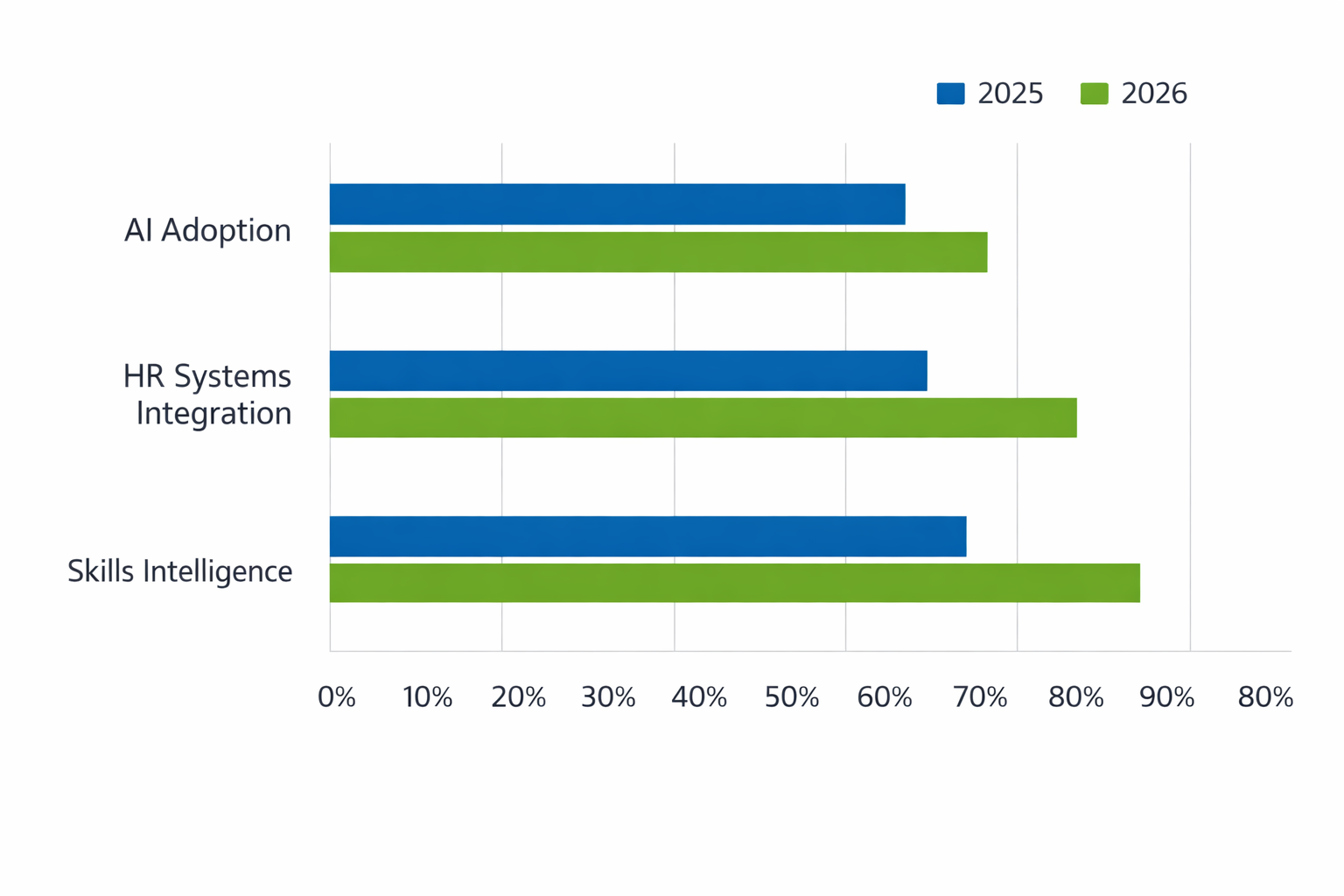
The practical takeaway is that 2026 is not about adopting AI for its own sake. It is about responding to a changing environment in which work is more fluid, skills are more dynamic, and employees expect systems that are easier to navigate. HR leaders who understand these shifts will be better positioned to modernize their operating model instead of simply layering new tools on old processes.
3. From point solutions to platforms: why integration is becoming the new priority
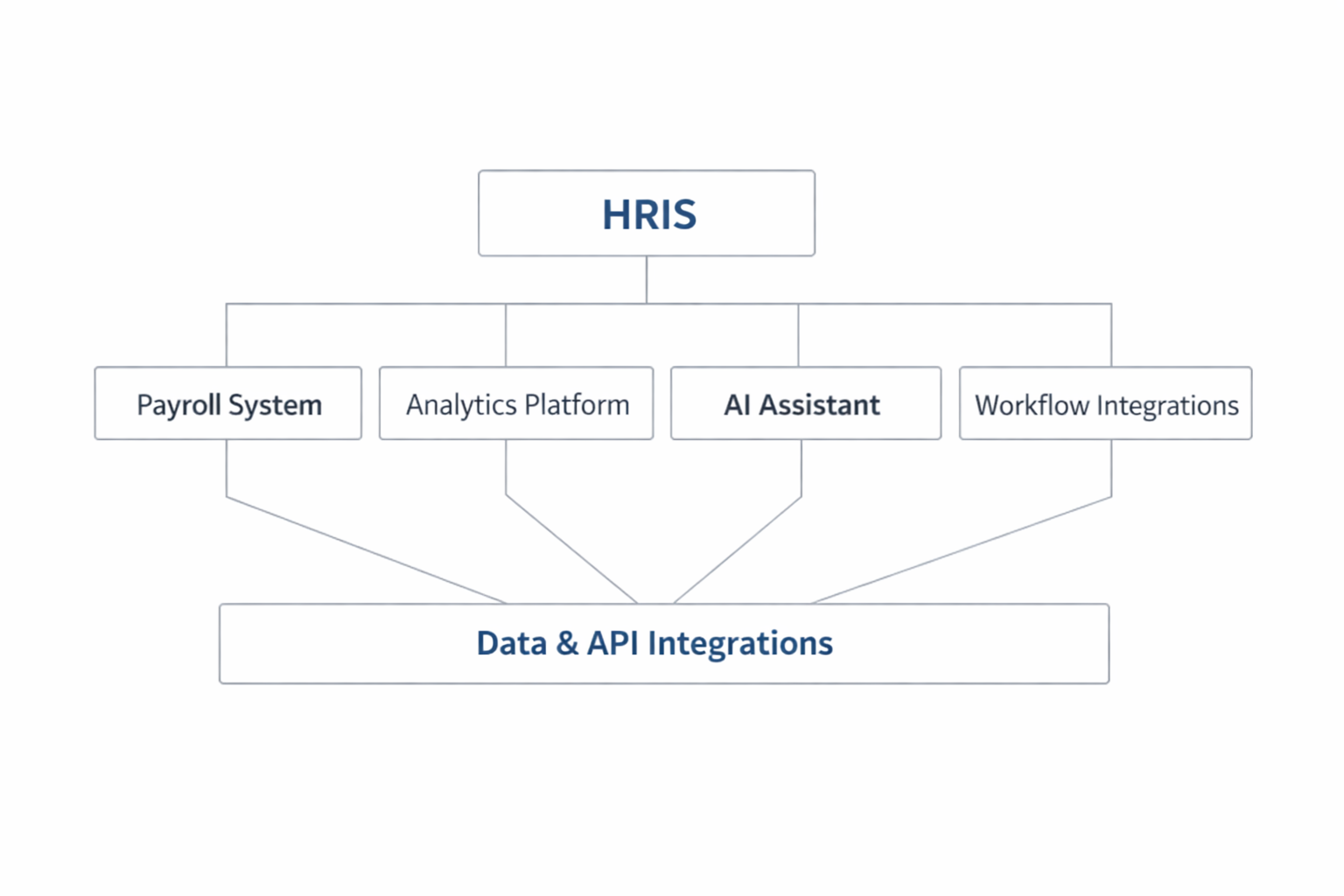
The HR technology stack has historically grown by accumulation. A recruiting tool here, a learning system there, a case management layer somewhere else, and separate analytics or scheduling tools on top. That approach creates local improvements but often produces global inefficiency. Data is duplicated, workflows break between systems, and users are forced to learn multiple interfaces for what is functionally a single people process. In 2026, integration has become the strategic priority because AI becomes far more useful when it can operate across connected data and workflows. (mckinsey.com)
Platform thinking matters for three reasons. First, it improves the employee experience by reducing the number of places a person has to visit to complete a task. Second, it improves data quality because the same person, role, skill, or case record is less likely to be represented inconsistently across systems. Third, it improves AI performance because models and agents work better when they have reliable context. McKinsey’s 2026 research explicitly ties value creation to humans and AI agents collaborating in redesigned roles, which depends on more connected operating environments than most HR departments currently have. (mckinsey.com)
Integration also changes procurement logic. Instead of asking whether a standalone tool is best-in-class, HR leaders should ask whether it extends the platform’s core data model, whether it integrates cleanly with identity, payroll, workforce planning, and case management, and whether it creates reusable context for multiple use cases. This is especially important for skills intelligence, employee service delivery, and manager self-service. A fragmented stack may deliver visible features, but it usually struggles to support enterprise-scale AI because the underlying processes are too disjointed. (deloitte.com)
There is also a governance advantage to platforms. When AI functionality is spread across many point solutions, it becomes much harder to know what data is used, where decisions are made, and which controls apply. A platform-based architecture makes it easier to standardize audit trails, approval paths, retention policies, and access rules. That does not eliminate risk, but it makes risk management tractable. NIST’s AI Risk Management Framework is relevant here because it frames AI risk as something to be managed through organizational processes, not just vendor claims. (nist.gov)
The point is not to eliminate specialized tools. The point is to place them inside a coherent architecture where data, workflows, and governance are shared. In 2026, the winning HR tech strategy is less about owning more software and more about ensuring the software behaves like one system.
4. The rise of skills intelligence: moving from job titles to capability-based planning
One of the most consequential shifts in HR is the move from job-title-based planning to skills-based planning. Job titles remain useful for structure, compensation, and reporting, but they are too coarse to capture how work is actually changing. AI, automation, and fast-moving business priorities are forcing organizations to think in terms of capabilities, adjacent skills, proficiency levels, and deployable work packages rather than static roles. Deloitte’s 2026 research and McKinsey’s organizational insights both point to changing work and skills as central forces shaping performance. (deloitte.com)
Skills intelligence is the layer that makes this shift operational. It combines data from HR systems, learning platforms, project histories, talent profiles, assessments, and sometimes external labor market sources to create a more current view of what employees can do and what the organization needs. In practice, this enables better workforce planning, faster internal mobility, more targeted learning recommendations, and more precise succession discussions. It also helps leaders identify where AI should augment existing talent and where new capabilities must be built. (shrm.org)
The reason this matters in 2026 is that many organizations are discovering that skills are the real constraint on AI value. Deloitte’s AI research identifies the AI skills gap as a major barrier to integration, and its human capital research emphasizes that companies need stronger capabilities in change leadership, workforce planning, and work redesign. That means HR cannot treat skills intelligence as a reporting enhancement. It must be treated as core infrastructure. (deloitte.com)
A capability-based model also changes how decisions are made. Instead of asking, “Who has the right title for this role?” leaders can ask, “Who has the right mix of capabilities for this project, and what would it take to close the gap?” That is especially valuable for internal talent marketplaces, strategic workforce planning, and reskilling programs. It can also reveal hidden capacity in adjacent teams that would otherwise be invisible in a title-based organization chart. The result is a more dynamic talent system that can respond to business changes without over-relying on external hiring. (mckinsey.com)
This shift is not purely technical. It requires governance over skill definitions, validation methods, data refresh cycles, and manager adoption. If skills data is wrong or stale, leaders will quickly lose confidence in the system. But when done well, skills intelligence becomes one of the highest-leverage investments in the modern HR stack because it connects hiring, learning, mobility, planning, and AI adoption into one coherent capability model.
5. AI in HR with guardrails: where automation helps and where human oversight is essential
AI can create substantial value in HR, but only when the division of labor between machines and humans is intentional. SHRM’s 2026 research shows that current AI use in HR is concentrated in recruiting, HR technology, learning and development, and employee experience, which are all areas where automation can reduce repetitive work and improve responsiveness. At the same time, the same research shows lower adoption in more sensitive practice areas such as inclusion and diversity, compliance, and executive relations. That distribution is sensible because not all HR tasks are equally suitable for automation. (shrm.org)
The highest-value AI use cases in HR usually fall into three categories. The first is administrative acceleration: scheduling, routing, drafting, summarizing, and answering common questions. The second is decision support: ranking, recommending, pattern detection, and surfacing insights for humans to evaluate. The third is personalization: tailoring learning paths, communications, and service experiences based on context. All three can improve efficiency and quality, but none should be deployed without controls. (shrm.org)
Human oversight becomes essential whenever an AI system can affect opportunity, pay, performance, fairness, or legal exposure. Hiring recommendations, promotion inputs, compensation guidance, disciplinary decisions, and diversity-related analyses should not be left to opaque automation. NIST’s AI RMF is useful here because it emphasizes mapping, measuring, managing, and governing AI risks. In HR, that means defining which outputs are advisory, which require review, which are prohibited, and what documentation is needed for each. (nist.gov)
Guardrails should also address data quality, bias monitoring, transparency, and escalation paths. Employees and managers need to know when they are interacting with AI, what data is being used, and how to challenge an output they believe is wrong. This is particularly important because Gartner warns that AI can produce low-quality work at scale if employees are pressured to use it without proper judgment. In other words, governance is not about slowing innovation; it is about preserving trust and reliability as automation expands. (gartner.com)
A useful operating rule is simple: automate the repeatable, assist the judgment-intensive, and reserve the consequential for human decision makers. That rule keeps AI in its proper role while still allowing HR to capture meaningful gains.
6. Employee experience as a system, not a slogan: designing frictionless HR journeys
Employee experience is often discussed as if it were a cultural aspiration, but in practice it is a system design challenge. The experience employees have with HR is shaped by onboarding forms, case response times, policy clarity, manager support, self-service usability, workflow consistency, and the degree to which work feels personalized rather than bureaucratic. SHRM’s 2026 research and employee experience work show that employee experience has become a top priority, reflecting the reality that organizations now compete not only on pay but also on ease, responsiveness, and trust. (shrm.org)
AI can dramatically improve employee experience when it is used to remove friction at key moments. Good use cases include guided onboarding, personalized answers to benefits or policy questions, proactive task reminders, manager copilots for common employee issues, and service routing that gets people to the right support faster. Gartner’s 2026 view that HR should focus on saving employee effort is especially relevant here. The goal is not just to reduce time spent in a system; it is to reduce cognitive effort, uncertainty, and repetitive handoffs. (gartner.com)
Thinking of employee experience as a system means mapping the full journey, not optimizing only isolated steps. For example, onboarding is not just document collection. It is a sequence that includes offer acceptance, system access, manager setup, first-week orientation, role clarity, training, and social integration. If any one of those steps fails, the overall experience deteriorates. AI is useful when it coordinates these steps and adapts support based on what has or has not been completed. (deloitte.com)
The best employee experience designs also avoid the trap of over-automation. Not every HR interaction should be conversational or AI-mediated. Employees still need human support for sensitive life events, conflicts, accommodations, and complex cases. The right design principle is to use AI to eliminate avoidable friction and preserve human attention for the moments that matter most.
7. What successful implementations do differently after go-live
Many HR technology implementations are treated as projects that end at launch. In reality, go-live is the start of the value realization phase. Successful teams understand that adoption, process refinement, and governance improvements continue well after the system is switched on. Deloitte’s 2026 research is clear that organizations must move from change management to changefulness: continuous learning, feedback, and in-the-moment support built into the work itself. That mindset is especially important for AI-enabled HR systems, which need tuning, retraining, and policy updates over time. (deloitte.com)
The strongest post-go-live teams do several things differently. First, they define value metrics before launch and monitor them in short cycles. Second, they identify process bottlenecks that only become visible after real users start interacting with the system. Third, they collect structured feedback from employees, managers, recruiters, and HR service staff rather than relying only on ticket volume or satisfaction scores. Fourth, they treat model drift, policy changes, and data quality issues as operational risks that need active management. (shrm.org)
They also create ownership beyond the implementation team. Too many HR systems fail because the project team disbands once the vendor is live, leaving no one responsible for adoption, training, or continuous improvement. In contrast, mature organizations assign product ownership, business ownership, and governance ownership separately. That structure ensures that the system remains relevant as policies, jobs, and business needs evolve. (mckinsey.com)
Another differentiator is communication. Successful implementations do not just announce the new tool; they explain what problem it solves, how it changes the user experience, what is automated, what remains human-led, and how employees should expect to interact with the system. SHRM research showing that many organizations still lack effective AI change management suggests that communication is one of the most underinvested levers in HR transformation. (shrm.org)
The lesson is straightforward: go-live is not a finish line. It is a controlled learning phase that should be managed with the same rigor as the implementation itself.
8. Metrics that matter: how to measure adoption, efficiency, fairness, and retention impact
If AI in HR is going to earn trust, it needs a measurement framework that goes beyond vanity metrics. Counting logins, launches, or the number of use cases is not enough. The real question is whether AI improves the outcomes that matter to the business, employees, and HR itself. SHRM’s 2026 research is especially revealing because it shows that many organizations measure productivity and cost savings, but a large share do not formally measure AI success at all. That gap should be closed quickly. (shrm.org)
A useful measurement model has four layers. The first is adoption: Are target users actually using the tool, and are they returning to it? The second is efficiency: Has the time, effort, or cost of the process improved? The third is fairness and quality: Are outputs consistent, explainable, and free from obvious bias patterns? The fourth is business impact: Are you seeing improvements in retention, mobility, conversion, employee satisfaction, or manager effectiveness? (gartner.com)
Different use cases require different metrics. For recruiting, you might track time-to-shortlist, recruiter effort, candidate completion rates, and offer acceptance quality. For employee service, you might track case resolution time, first-contact resolution, escalation rate, and employee satisfaction. For skills intelligence, you might track profile completeness, internal fill rate, mobility velocity, and learning-to-role transitions. For AI-enabled employee support, you might track self-service success, task completion rates, and reduced manual handoffs. (shrm.org)
Fairness deserves its own measurement category. HR leaders should look for adverse impact in AI-assisted decisions, test whether recommendation patterns differ by group, and audit outputs for consistency over time. NIST’s framework supports this kind of risk-focused measurement, and it is especially important in high-stakes HR processes where a small bias can create significant legal and reputational exposure. (nist.gov)
The best KPI dashboards combine leading and lagging indicators. Adoption tells you whether the system is being used. Efficiency tells you whether it saves effort. Fairness tells you whether it is safe. Retention, mobility, and quality metrics tell you whether it is actually improving the organization. Without that full chain, AI in HR remains an anecdote instead of a capability.
9. Common failure modes to avoid: disconnected tools, weak governance, and poor change management
Most AI-in-HR failures are not caused by the model itself. They are caused by poor operating design. The first common failure mode is tool sprawl: too many disconnected products, each with its own data model, user experience, and administrative burden. This leads to fragmented workflows, duplicated records, inconsistent reporting, and a confusing employee experience. It also makes it difficult to scale AI because the organization lacks a shared context layer. (deloitte.com)
The second failure mode is weak governance. Without clear decision rights, AI use cases proliferate in an unmanaged way. Teams may adopt tools without security review, legal assessment, bias testing, or a clear policy for what the system is allowed to decide. NIST’s AI RMF exists precisely because AI risk cannot be handled as an afterthought. HR leaders need structured governance for approvals, audits, access controls, documentation, and escalation. (nist.gov)
The third failure mode is poor change management. Organizations often assume that if a tool is useful, people will naturally adopt it. In practice, people adopt what is easy, well-communicated, and trustworthy. Deloitte’s 2026 research shows how few organizations believe they manage change effectively, and SHRM’s work similarly points to low confidence in employee adoption of AI. If users do not understand the system, distrust it, or see it as extra work, usage will plateau quickly. (deloitte.com)
The fourth failure mode is over-automation. Some organizations automate tasks that should remain human-led, especially where context, empathy, or risk assessment matters. That can create alienation, bad decisions, or policy exceptions handled badly. Gartner’s warnings about workslop are relevant here: AI can create volume without value if organizations optimize for throughput over quality. (gartner.com)
The final failure mode is treating AI as a side project rather than a transformation of HR operations. Successful AI adoption requires alignment across HR, IT, legal, security, finance, and business leadership. Without that alignment, the organization will end up with impressive pilots and disappointing enterprise results.
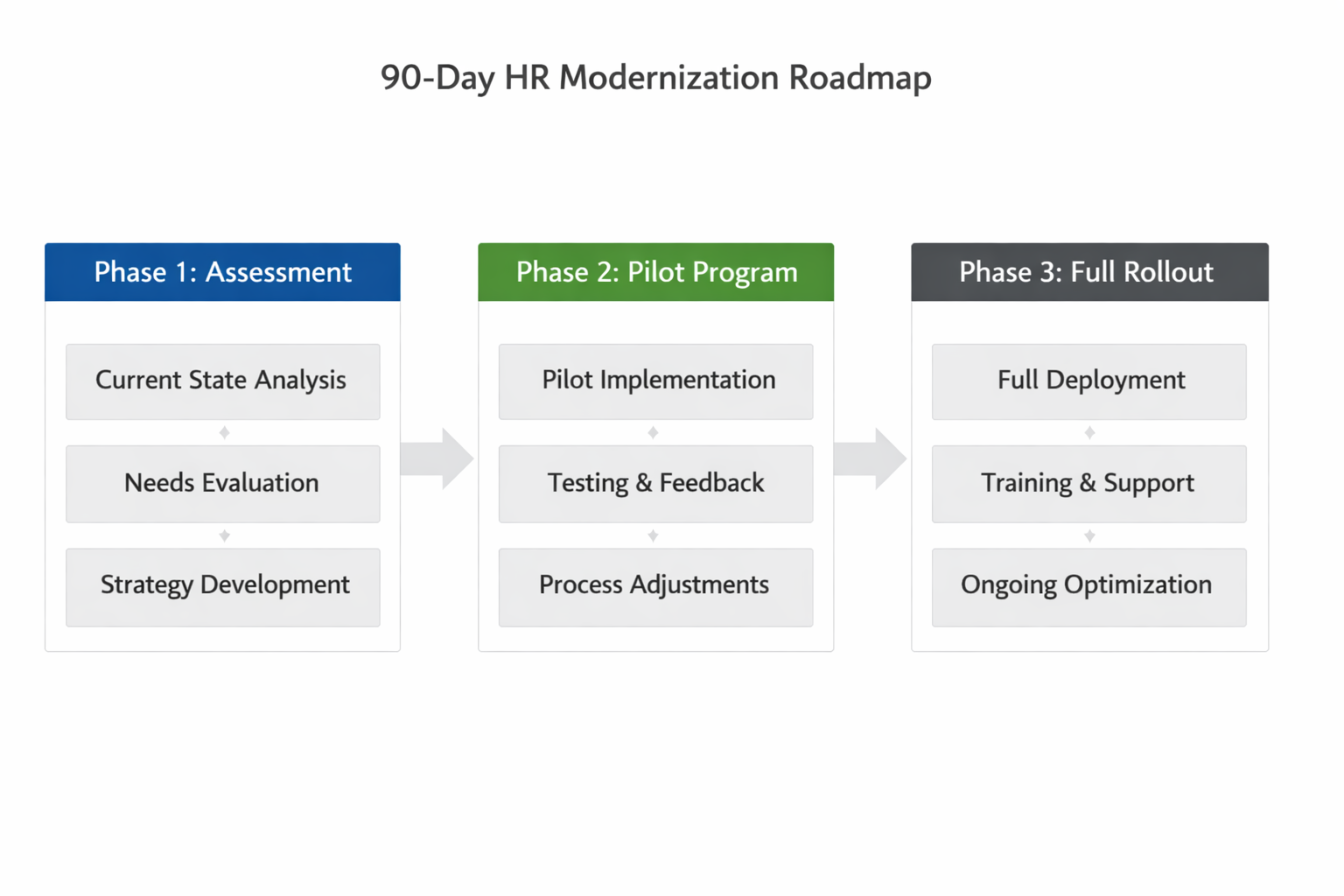
10. A practical 90-day roadmap for HR leaders modernizing their tech and operating model
A 90-day roadmap is the right scale for an HR modernization start because it is long enough to build momentum and short enough to stay focused. The goal is not to finish transformation in three months. The goal is to establish the architecture, governance, and use-case priorities that will support scaling. The best way to start is by selecting a small number of high-value processes where friction is obvious and data is available. (deloitte.com)
Days 1–30: establish the foundation
Start by mapping the current HR architecture, workflows, and pain points. Identify where employees, managers, and HR staff spend the most time on repetitive, low-value tasks. At the same time, define your AI governance model: who approves use cases, what data can be used, what counts as high risk, and what human review is mandatory. NIST’s framework can inform this structure, even if your implementation is lighter weight. The deliverable at the end of this phase should be a clear list of priority workflows and a governance charter. (nist.gov)
Days 31–60: design the target operating model
Move from problem mapping to solution design. Decide whether your priority is improving employee service, recruiting efficiency, skills intelligence, or onboarding experience. For each selected use case, define the process flow, data inputs, automation boundaries, human checkpoints, and success metrics. Also decide whether the existing stack can support the use case or whether integration work is required. This is where platform thinking matters most. (deloitte.com)
Days 61–90: launch, learn, and tune
Launch one or two narrow, high-value use cases rather than a broad suite of features. Communicate the purpose clearly, train users, and establish a feedback loop from day one. Track adoption, cycle time, quality, and user satisfaction weekly. Use what you learn to refine prompts, workflows, approval rules, and communications. The point is to create a repeatable pattern for value delivery, not to maximize feature count. (shrm.org)
A practical roadmap should also include capability building. HR teams need data literacy, process design skills, AI governance literacy, and change leadership competence. Deloitte’s research suggests that the most effective organizations are the ones that invest not just in technology, but in the people and operating capabilities needed to use it well. That is the difference between an AI pilot and an AI-ready HR function. (deloitte.com)
Conclusion: the new HR playbook is about systems, not software
AI in HR in 2026 is no longer a novelty. It is a test of whether the HR function can operate as a disciplined, measurable, human-centered system. The research is clear: the organizations seeing the best results are not the ones deploying the most tools, but the ones redesigning workflows, integrating data, building skills intelligence, and applying guardrails where decisions are consequential. (deloitte.com)
The practical playbook is equally clear. Focus on measurable outcomes, not vendor hype. Move from fragmented point solutions to coherent platforms. Treat skills as infrastructure. Use AI to remove friction, but keep humans accountable for fairness, empathy, and high-stakes judgment. Measure adoption, efficiency, and impact with the same seriousness you apply to financial performance. And above all, invest in change management and governance, because the value of AI in HR depends less on the algorithm than on the operating model around it. (nist.gov)
HR leaders who embrace this shift will do more than modernize systems. They will create people operations that are faster, fairer, more adaptive, and better aligned with how work actually happens in 2026.