
AI-Native Product Teams: How Modern Tech Firms Build Faster Without Sacrificing Quality
Software teams are under pressure to deliver more quickly than ever: ship features earlier, respond to market changes sooner, and reduce the cost of iteration without compromising reliability. But the old definition of “moving fast” — hiring more developers, increasing sprint velocity, and pushing code harder — is no longer enough. Modern product organizations are discovering that speed alone is not a sustainable competitive advantage. What matters now is the ability to build intelligently: combining domain expertise, architectural discipline, automation, and AI-assisted workflows into a system that produces high-quality software at a much higher throughput.
This shift is not just about using AI tools for code completion. It is about redesigning the product development model around AI-native workflows, where software engineering, product management, design, QA, and operations are increasingly supported by intelligent systems. In this model, teams can validate ideas faster, generate and review code more efficiently, improve documentation and testing coverage, and maintain stronger alignment between business goals and technical execution. At the same time, the most successful teams are not replacing human judgment — they are amplifying it.
The result is a new operating model for technology firms. Build speed matters, but so do accessibility, maintainability, security, and user trust. Product teams must now decide when AI should automate repetitive work, when engineering effort should be customized for long-term value, and when team scale is the right answer to a bottleneck. The companies that get this balance right are not simply shipping faster. They are building systems that are easier to evolve, easier to trust, and more resilient over time.

1. Why the old “build faster” mindset is being replaced by “build smarter”
For years, product organizations treated speed as a proxy for success. If a team shipped more often, completed more stories, or cut lead times, it was assumed they were winning. But this framing breaks down when speed creates hidden costs: inconsistent quality, technical debt, fragmented architecture, and a backlog of remediation work that slows the organization later. The real issue is not how quickly code is written. It is whether the team is solving the right problem with the right level of effort and confidence.
“Build smarter” means optimizing for outcomes, not just output. A smarter team can identify when a feature should be prototyped, when it should be fully engineered, and when it should not be built at all. This requires better product discovery, more rigorous prioritization, and tighter loops between customer feedback and technical execution. AI changes the equation here because it reduces the cost of exploration. Teams can generate draft designs, summarize requirements, scaffold services, write tests, and evaluate alternatives faster than before. That allows more time to be spent on decisions that actually matter: user value, risk management, and system fit.
The shift also reflects a growing understanding that software development is a system, not an assembly line. A team that ships rapidly but repeatedly revisits the same defects, design issues, or scaling constraints is not truly fast. A team that uses AI to accelerate the routine while preserving engineering standards is far more effective. In other words, “build faster” is being replaced by “build with leverage.” The goal is not just more code per hour; it is more validated value per unit of effort.
2. The rise of AI-native software engineering and what it changes across the SDLC
AI-native software engineering is not merely adding AI tools to an existing workflow. It means the software development life cycle is being restructured so that AI participates at multiple stages, from ideation through maintenance. In practice, this changes how teams define requirements, break down work, implement features, test behavior, document systems, and respond to incidents. The SDLC becomes more iterative, more assistive, and more data-informed.
In the planning stage, AI can help teams synthesize customer feedback, cluster bug reports, identify common themes in support tickets, and draft product requirements faster. This shortens the path from signal to specification. During design and implementation, developers can use AI to generate boilerplate, suggest refactors, create API scaffolding, or produce example integrations. This is especially useful in repetitive domains such as CRUD interfaces, internal tooling, and standard service orchestration. In testing, AI can generate unit tests, propose edge cases, and identify gaps in coverage. In documentation, it can help maintain internal and external docs as systems evolve. In operations, it can assist with incident summaries, log analysis, and runbook generation.
What changes most is not the existence of these tasks, but their economics. Work that used to consume significant engineering time now becomes cheap enough to do more often. That means teams can iterate more quickly, experiment more safely, and enforce stronger quality gates without dramatically increasing effort. However, AI-native engineering also introduces new responsibilities: prompt discipline, review rigor, security awareness, and validation of generated output. Teams must design workflows that treat AI as a contributor, not an authority. The best organizations use AI to expand the surface area of productivity while preserving the human processes that keep systems correct, secure, and maintainable.
3. Why teams are still essential: trust, review, and human judgment in AI-assisted development
A common misconception about AI-assisted development is that it reduces the need for strong teams. In reality, the opposite is true. As AI becomes more capable, the role of the human team becomes more important, not less. The reason is simple: software is ultimately a trust problem. Users trust that the product works, that data is handled correctly, that the interface is understandable, and that the system will behave consistently under pressure. AI can help produce code, but it cannot own that trust end to end.
Review is one of the clearest examples. AI-generated code may be syntactically correct and even logically plausible, but it still needs engineering oversight. A team must verify whether the code aligns with architecture, whether it introduces security issues, whether it preserves performance characteristics, and whether it fits long-term maintainability goals. Human reviewers also bring contextual awareness that AI lacks: knowledge of business priorities, hidden constraints, customer commitments, and organizational risk tolerance. This context is critical when deciding whether a solution is acceptable or simply expedient.
Human judgment also matters in ambiguous situations where the “right” answer depends on tradeoffs. Should a team optimize for speed to market or operational simplicity? Should it accept a temporary workaround or invest in a cleaner abstraction? Should it use a generated solution or craft a custom implementation for a strategically important area? These are not just technical questions. They are product and business decisions. AI can inform them, but it cannot decide them responsibly.
The strongest AI-assisted teams are built around clear ownership, lightweight but disciplined review, and a culture of accountability. They do not assume AI output is correct. They inspect it, validate it, and integrate it into a broader engineering process that includes testing, observability, and feedback. In this model, teams are not a bottleneck to AI acceleration. They are the mechanism that makes acceleration safe and durable.
4. Designing for accessibility from day one as a product quality standard, not a checkbox
Accessibility is often treated as a compliance task added late in the lifecycle, but that approach is expensive and ineffective. If accessibility is not built into the product from the start, teams end up retrofitting UI behavior, keyboard support, semantic structure, and contrast adjustments after the fact. That usually means rework, inconsistent experiences, and missed opportunities to serve a wider user base. In an AI-native product organization, accessibility should be considered part of the definition of quality.
Designing for accessibility from day one changes how teams think about interfaces, interactions, and content. It affects color systems, spacing, focus states, form validation, error handling, motion, and copy clarity. It also affects how AI-generated output is reviewed. For example, a generated UI may look polished but fail basic accessibility expectations if it lacks semantic structure or proper labeling. A developer using AI to accelerate front-end work still needs to validate that the result is navigable by keyboard, compatible with assistive technologies, and understandable without visual cues.
Accessibility is also closely tied to product quality because it improves the experience for everyone, not just users with disabilities. Clear labels, predictable navigation, readable content, and resilient interaction patterns reduce friction across the board. They also lower support burden and improve task completion rates. Teams that treat accessibility as a first-class quality attribute tend to build more robust systems because they are forced to pay attention to structure and clarity.
The practical implication is that accessibility needs to live in design systems, component libraries, acceptance criteria, and QA routines. It should be checked during code review, validated in automated testing where possible, and included in definition-of-done standards. AI can help by generating accessibility checklists, identifying missing labels, and suggesting improvements, but it cannot replace intentional design. The organizations that get this right do not see accessibility as overhead. They see it as a marker of engineering maturity.
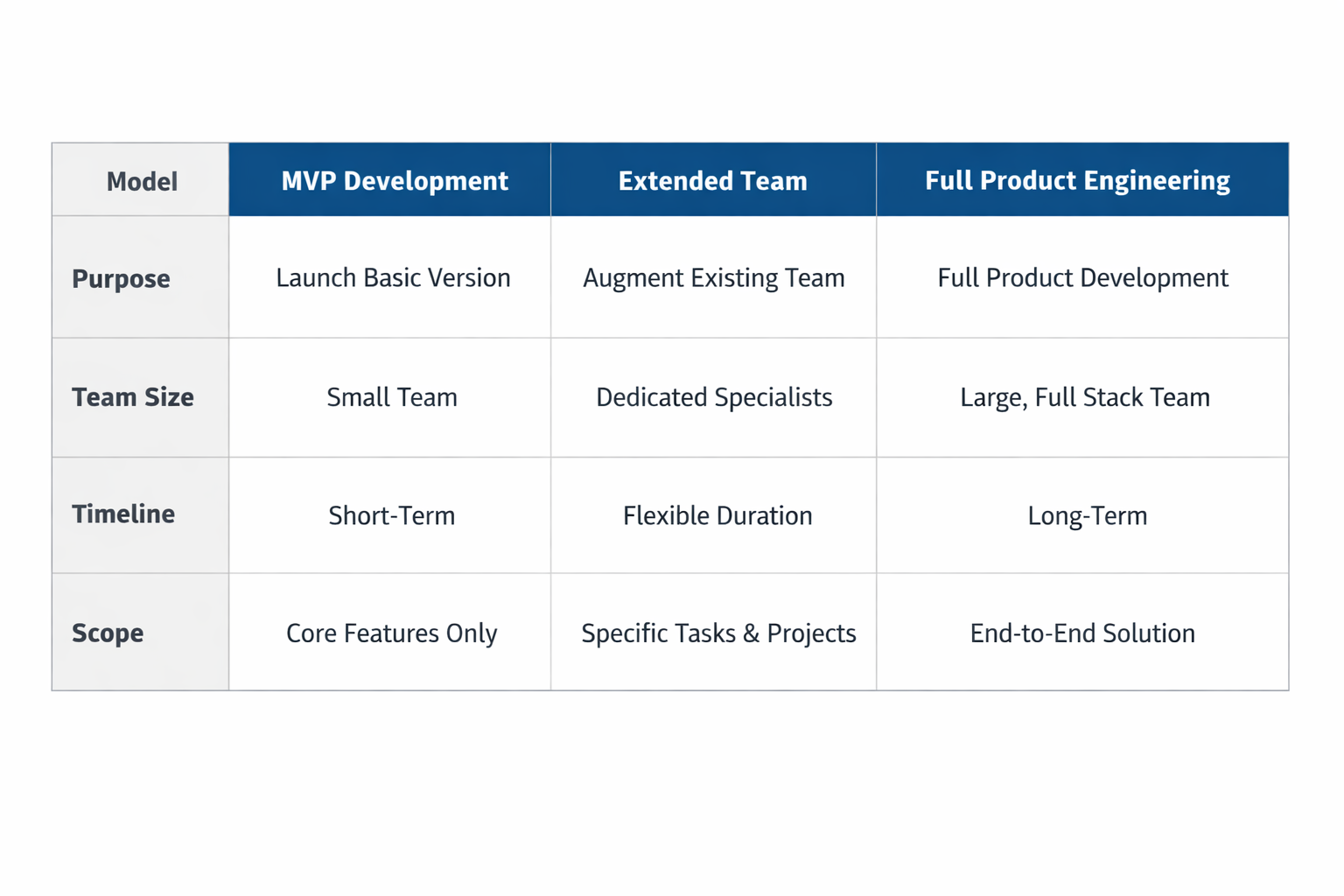
5. Choosing the right build path: MVPs, replatforming, or extended teams
Not every product initiative should be handled the same way. One of the most important decisions a modern tech firm can make is choosing the right build path for the problem at hand. AI changes the economics of this decision, but it does not eliminate it. Teams still need to distinguish between a minimal viable product, a replatforming effort, and a scale-up requiring extended delivery capacity.
An MVP is appropriate when the primary objective is learning. The goal is to test demand, validate a workflow, or prove that a business model resonates before investing heavily. AI can dramatically accelerate MVP creation by generating scaffolding, test data, and draft interfaces. This lets teams focus on validation rather than overengineering. But MVPs still need enough structure to learn reliably. A rushed prototype that cannot collect clean feedback or support basic usage is not a good MVP.
Replatforming is different. It is typically driven by technical debt, growth constraints, security requirements, or the need to modernize an aging stack. Here the priority is not rapid experimentation but long-term stability and operational efficiency. AI can assist by helping analyze legacy code, document dependencies, suggest migration paths, and automate parts of the testing effort. However, replatforming demands architectural discipline. It is a domain where shortcuts tend to become expensive later.
Extended teams are useful when a product organization has clear priorities but needs additional execution capacity across engineering, design, QA, or DevOps. This is often the right choice when time-to-market matters and internal teams are already operating near capacity. The value of the extended-team model increases when AI tooling is standardized, because it helps new contributors integrate faster and reduces ramp-up friction. But even then, success depends on strong internal ownership, clear interfaces, and decision-making authority.
The key is to match the build path to the business objective. MVPs optimize learning. Replatforming optimizes durability. Extended teams optimize throughput. AI improves all three, but only if the organization is honest about what it is trying to achieve.
6. What high-performing product teams share: architecture, iteration speed, and domain focus
High-performing product teams are rarely defined by one magical process. Instead, they tend to share a few structural traits that make their execution consistent. The first is sound architecture. Teams that can move quickly without breaking systems usually invest early in modularity, clear boundaries, and patterns that support change. This does not mean overengineering. It means designing systems so that new features can be introduced without constant cross-cutting edits. AI helps here by speeding up the creation of code, tests, and documentation, but architecture still determines whether the system remains understandable as it grows.
The second trait is iteration speed. Top teams shorten the feedback loop between idea, implementation, validation, and refinement. They rely on instrumentation, fast releases, and clear ownership so that learning happens continuously. AI strengthens iteration speed by reducing the cost of many “small” tasks that otherwise accumulate: summarizing findings, drafting test cases, creating internal docs, generating code skeletons, and triaging feedback. The result is more time spent on meaningful iteration rather than mechanical overhead.
The third trait is domain focus. Teams that understand the business deeply are better at choosing what to build, what to ignore, and what to optimize. Domain expertise also improves how AI is used. Prompts, code generation, architectural suggestions, and product recommendations are all more effective when the team knows the constraints and nuances of the domain. Generic teams often produce generic software. Domain-focused teams build solutions that fit the workflow, regulations, customer expectations, and operational realities of their market.
These traits reinforce each other. Good architecture supports fast iteration. Fast iteration reveals domain insight. Domain insight guides architecture choices. AI does not replace any of these advantages. It amplifies them when the team already has a strong foundation.
7. How cloud, web, and mobile decisions shape long-term product cost and flexibility
Technology strategy is not only about feature delivery. It is also about the economic shape of the product over time. Decisions about cloud architecture, web stack, and mobile platform have a direct effect on maintenance burden, hiring flexibility, performance, user reach, and future rework. AI can accelerate implementation in all three layers, but the strategic consequences of each choice remain significant.
Cloud decisions influence operational scalability and cost structure. A well-designed cloud-native system can improve deployment speed, resilience, and observability. But cloud complexity can also create hidden costs if teams adopt too many managed services, over-segment their architecture, or fail to standardize infrastructure patterns. AI can help generate infrastructure-as-code, document cloud topologies, and summarize operational patterns, but it cannot substitute for good platform design. The long-term question is not just what the cloud can support, but how easily the team can understand and evolve what it builds there.
Web decisions affect speed of delivery and reach. Web applications are often the fastest route to market because they reduce device fragmentation and simplify updates. They are especially useful for workflows that are desktop-centric, collaborative, or content-heavy. AI helps web teams accelerate component creation, testing, and accessibility review. But if the product requires deep device integration, offline functionality, or hardware-specific experiences, web may not be sufficient on its own.
Mobile decisions shape engagement, retention, and platform complexity. Native or cross-platform mobile development can be the right choice when the product depends on frequent usage, push notifications, camera access, geolocation, or offline behavior. Yet mobile introduces a different set of maintenance demands: app store cycles, device compatibility, platform-specific UI expectations, and more complex QA. AI can help with UI scaffolding, test generation, and release notes, but it does not remove the cost of platform fragmentation.
For product leaders, the key is flexibility. The best architecture choices preserve optionality and avoid premature lock-in. Teams should build in a way that allows them to evolve the product surface area as usage patterns, business priorities, and technical constraints change.
8. Measuring success beyond launch: adoption, maintainability, and business outcomes
Launching a product is not the finish line. In many cases, it is only the beginning of the real evaluation. If teams measure success only by launch date or shipped scope, they can miss whether the product is actually delivering durable value. Modern product teams need a broader scorecard that captures adoption, maintainability, and business outcomes.
Adoption is the first signal. Are users discovering the product? Are they completing key workflows? Are they returning? Are internal teams actually using the tool if it is an enterprise product? AI can help monitor support tickets, usage patterns, and qualitative feedback, but the core question is whether the product solves a meaningful problem enough that people keep coming back to it. Vanity metrics are not enough.
Maintainability is equally important. A product that works today but becomes increasingly difficult to change is a liability, not an asset. Teams should track defect rates, build stability, deployment frequency, test coverage trends, and the time required to make safe changes. AI can improve maintainability by helping generate tests, summarize code, and assist with refactoring, but the underlying system still needs to be designed for evolution. If new features consistently require large-scale rewrites, the product is becoming more expensive to own.
Business outcomes complete the picture. Depending on the product, these might include revenue growth, activation rates, conversion, retention, support deflection, operational savings, or time saved for users. A feature is successful if it changes meaningful business behavior, not just if it was delivered on time. This is where AI-native teams can be especially effective: by reducing the cost of experimentation, they can test more hypotheses and learn faster which product investments are worth expanding.
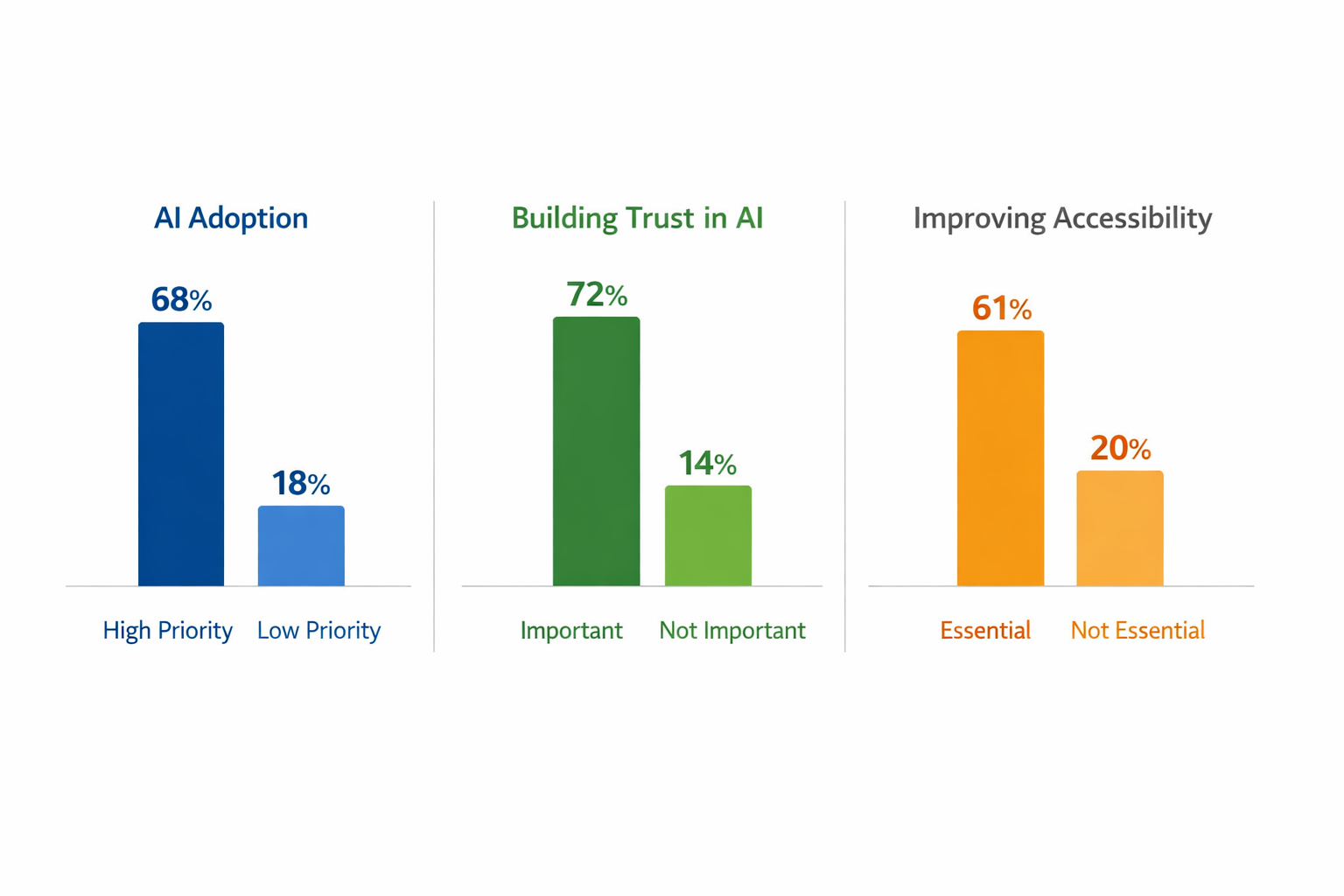
The best teams create a measurement system that ties engineering activity to customer and business value. That makes it easier to distinguish productive speed from busywork.
9. A practical framework for deciding when to automate, when to customize, and when to scale the team
One of the hardest decisions in product development is choosing the right response to a bottleneck. Should the team automate the task, customize a solution, or add more people? AI makes automation more attractive, but not every problem should be automated. Some problems deserve custom engineering. Others need more human capacity. The right answer depends on repetition, strategic importance, variability, and risk.
A useful framework starts with four questions:
1. Is the work repetitive and well-structured?
If yes, automation is usually a strong candidate. Tasks like test generation, documentation drafts, code formatting, support triage, and repetitive deployment steps are ideal for AI-assisted workflows or automation scripts.
2. Is the problem core to differentiation?
If the answer is yes, customization is often worth the cost. Products gain strategic advantage when they solve unique customer problems better than competitors. In these cases, generic automation may be too blunt. The team should invest in tailored architecture, bespoke workflows, or deeper product logic.
3. Is the bottleneck caused by process or capacity?
If a team is slowed by unclear ownership, bad handoffs, or inconsistent standards, adding people will not fix the issue. The better move is to improve the workflow. If the process is already strong and the bottleneck is simply throughput, then scaling the team may be appropriate.
4. What is the risk of being wrong?
The higher the risk, the more human review and deliberate engineering matter. Security-sensitive systems, compliance-heavy products, and customer-facing workflows with high business impact should not be aggressively automated without strong safeguards.
In practice, teams often use a hybrid approach. Automate the repeatable work. Customize the differentiating parts. Scale the team only when there is a clear, structurally justified need for more capacity. This is where AI-native teams gain leverage: they can automate more without losing control, and they can scale more effectively because AI absorbs a portion of the coordination and execution burden.
A simple decision tree can help operationalize this logic inside a product organization.
10. Closing takeaway: building great tech is now about orchestrating people, AI, and systems together
The next generation of product teams will not be defined by whether they use AI. They will be defined by how well they orchestrate AI with people, process, and architecture. The organizations that succeed will treat AI as a force multiplier for clarity, speed, and quality — not as a shortcut that removes accountability. They will use automation to reduce repetitive work, but they will keep human judgment at the center of high-stakes decisions. They will build accessible products from the start, design systems for change, and measure success by long-term value rather than short-term output.
This is what “AI-native” really means in practice. It is not about replacing teams. It is about empowering teams to work at a higher level of abstraction, with better leverage and less friction. It requires a stronger foundation in architecture, a more disciplined approach to quality, and a clearer understanding of product strategy. It also requires a willingness to rethink old assumptions about speed, staffing, and what it means to deliver software responsibly.
The most effective tech firms will not simply build faster. They will build with intention. They will know when to automate, when to customize, and when to invest in people. They will design for trust, maintainability, and accessibility from the beginning. And they will recognize that the future of great product development is not human versus AI. It is human plus AI, coordinated through systems that make both better.
Conclusion
AI-native product teams are changing the economics of software development. They can move faster because AI absorbs repetitive effort, but they remain successful only when strong engineering practices, accessibility standards, and product discipline are in place. The real advantage comes from building smarter: choosing the right problem, the right architecture, and the right delivery model for each situation.
For modern tech firms, the competitive edge is no longer simply speed. It is the ability to combine automation with judgment, scale with structure, and innovation with quality. Teams that master that balance will ship better products, adapt faster to change, and create software that lasts.